Year
2025
Role
UX, UI, Usability Testing
Team
Product Manager, UI/UX Designer, Front-end Developers
Product Manager,
UI/UX Designer,
Front-end Developers
Reimagining Features to Drive Repeat Transfers
OVERVIEW
53% of OrbitRemit's active customers across key corridors regularly send the same amount to the same recipient. Despite this highly predictable behaviour, the product lacked features to support or accelerate these routine transfers. Customers had to manually re-enter details each time, leading to frustration, fatigue, and potential for error. This gap also weakened habitual usage loops which are critical for retention in competitive financial services. I designed an experience that streamlines this repetitive process and encourages habit forming behaviour that aligns with our monthly active user targets while meeting customers needs around clarity and trust.
OBJECTIVE
Reduce friction in repeat transfers while reinforcing user trust and strengthening product stickiness.
RESEARCH
Using insights from previous user interviews and behavioural patterns, we identified three key personas:
Rate-Sensitive Senders
Create multiple transfers to “phish” for better rates.
1. Rate-Sensitive Harvesters
Create multiple transfers to “phish” for better rates.
Frequent Consistent Senders
Send the same amount at regular, predictable intervals.
Occasional/Ideal-Rate Senders
Wait for personal or rate-based triggers to maximise conversion rate.
To validate interest and minimise development risk, we launched two lightweight features:
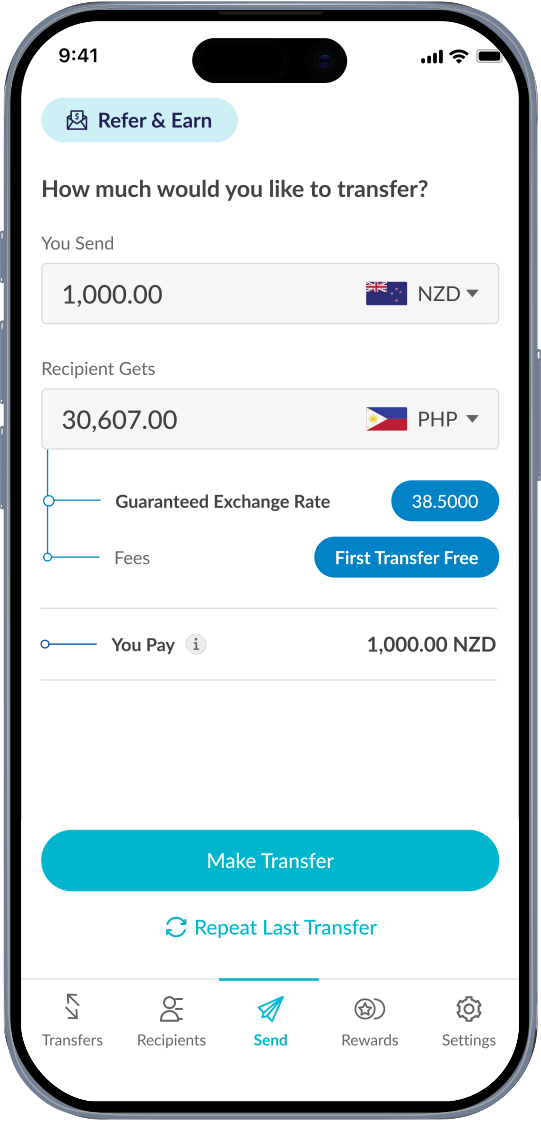
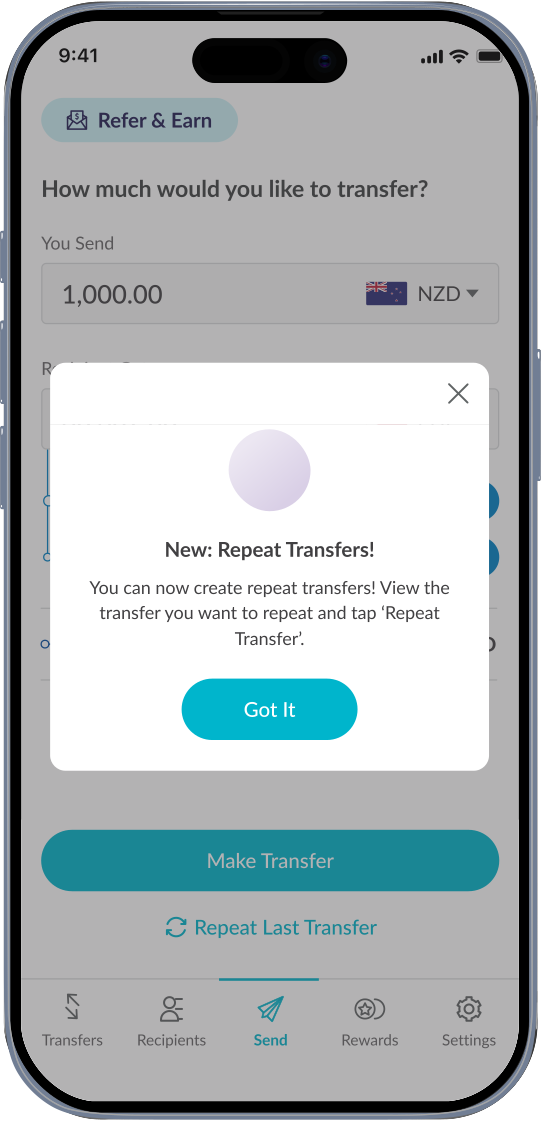
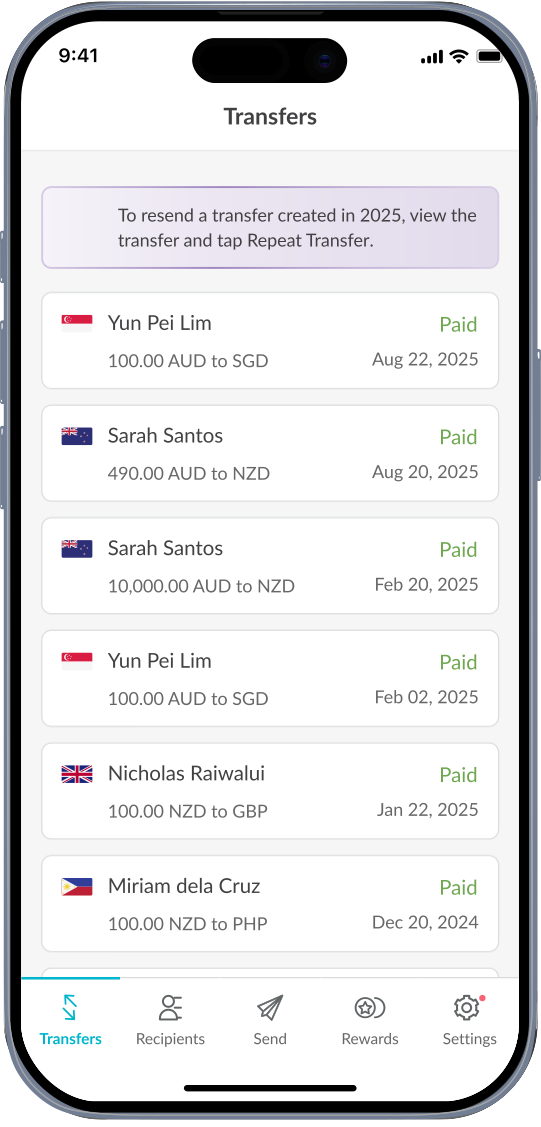
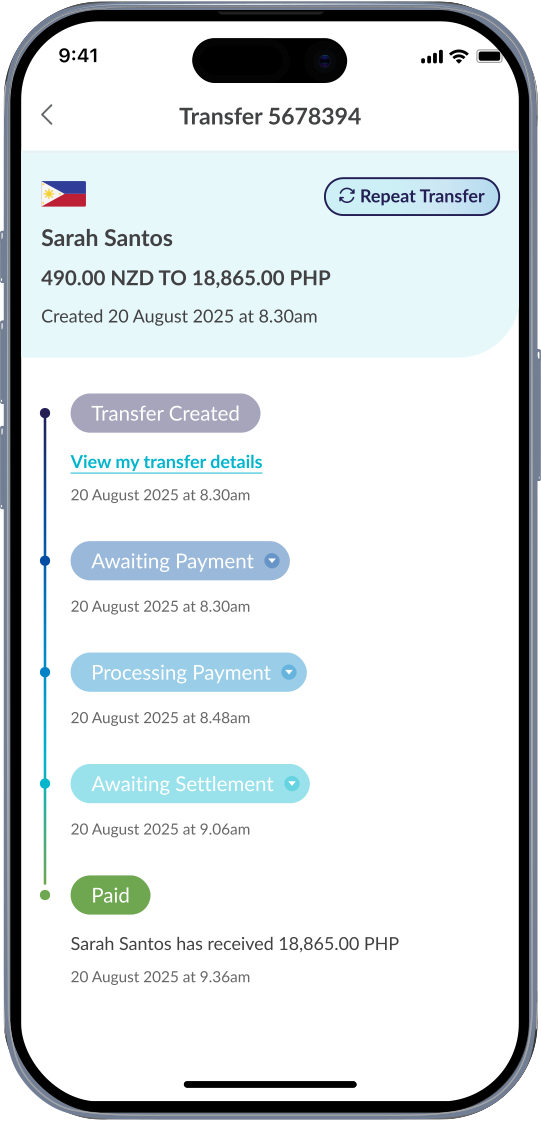
Repeat Transfer Buttons: Placed on the calculator and transfer history timelines, allowing users to recreate previous transfers with fewer steps.
Alongside this, we explored three reminder-based concepts with long-tenured customers with regular send patterns (7 years and above):
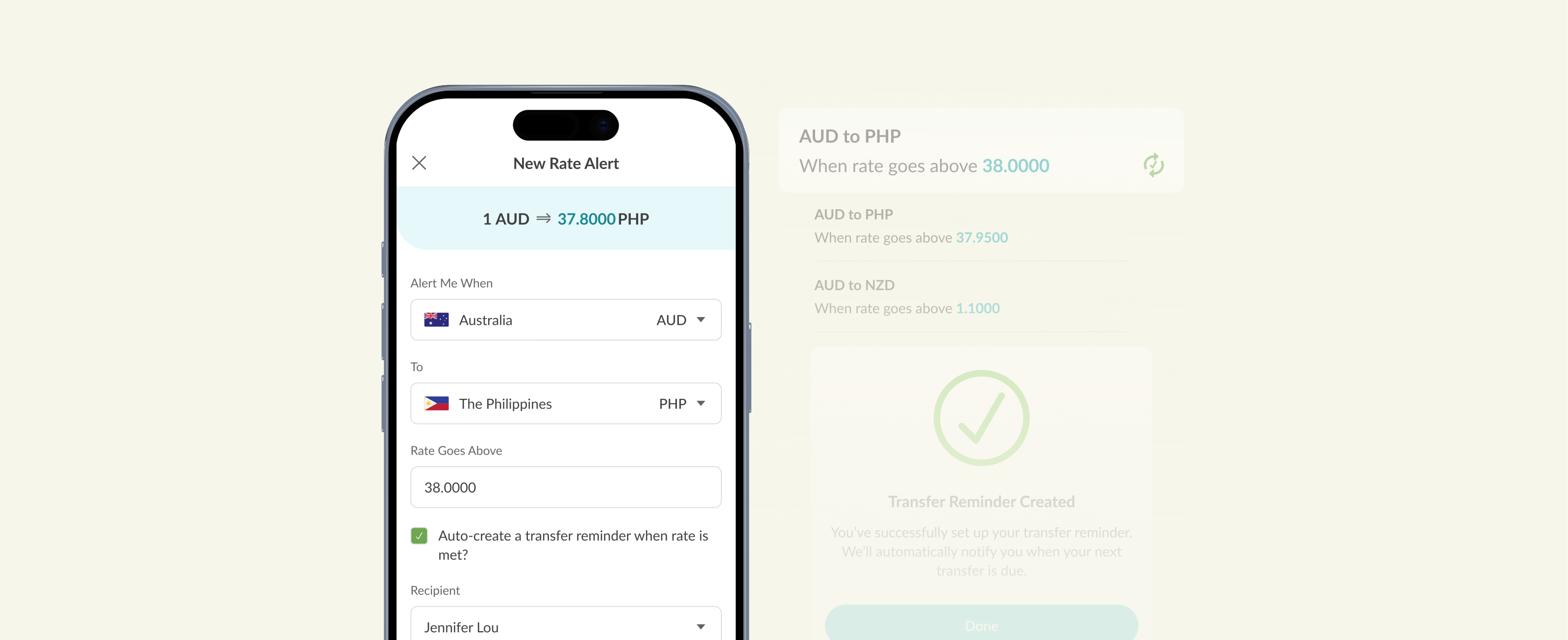
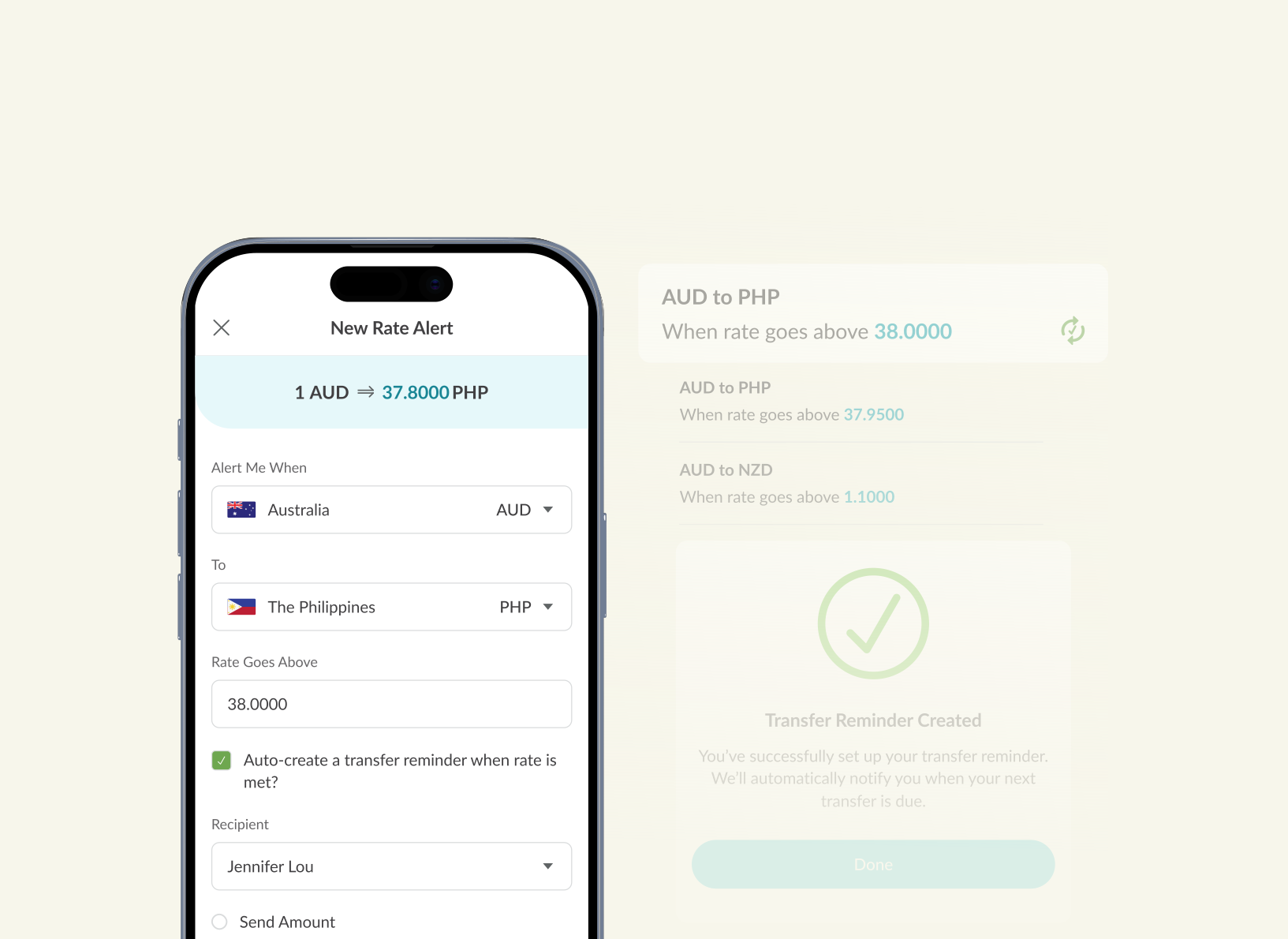
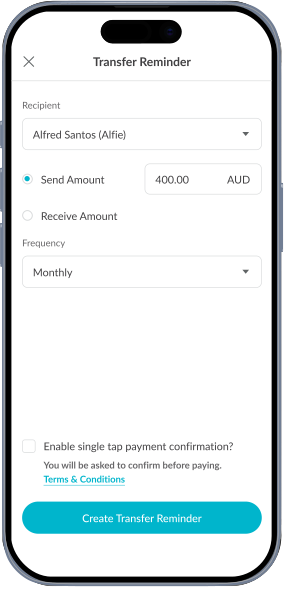
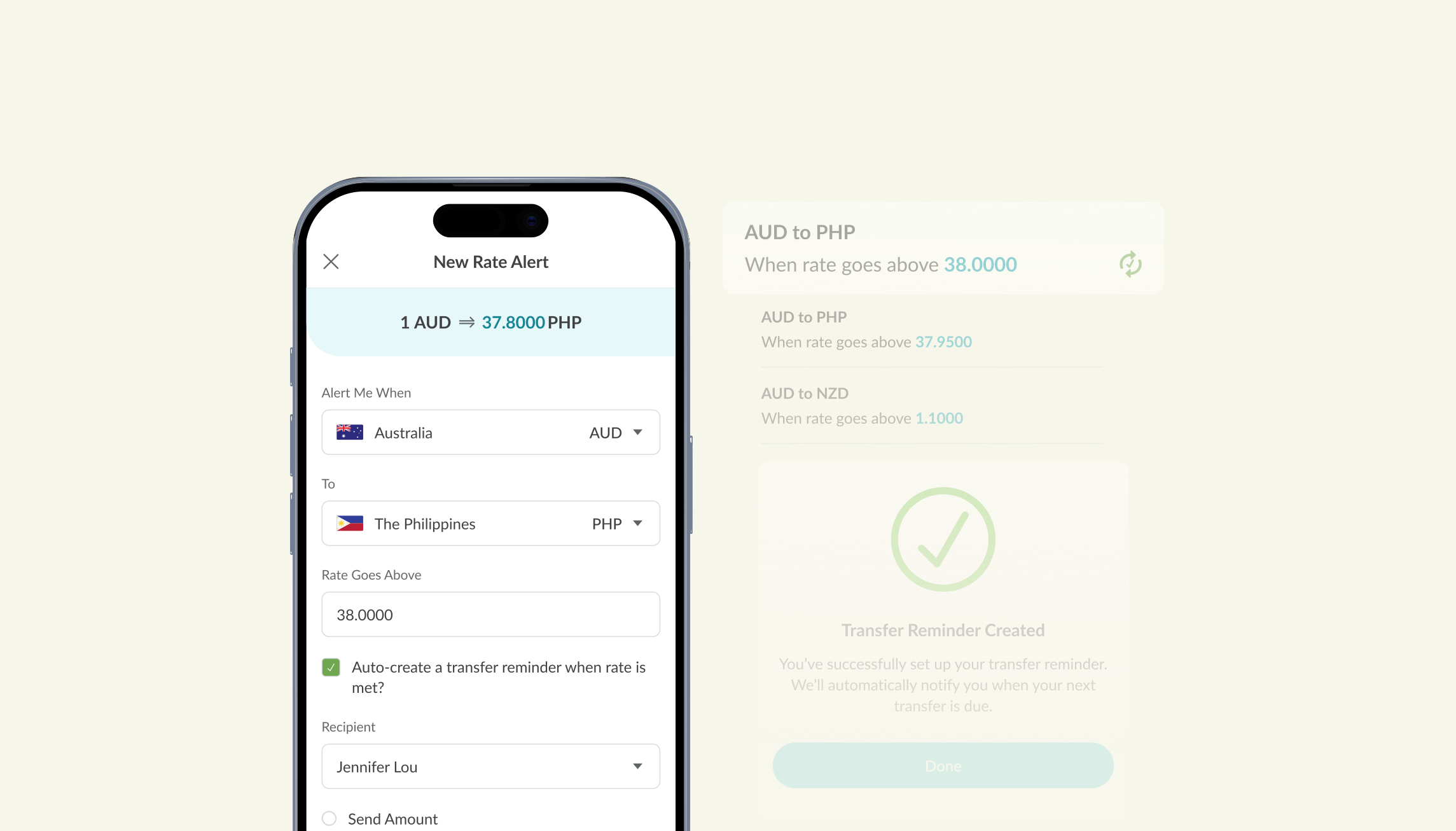
In-App Transfer Reminders
Let users schedule transfer prompts aligned with personal financial routines.
AUD to PHP
When rate goes above 38.0000
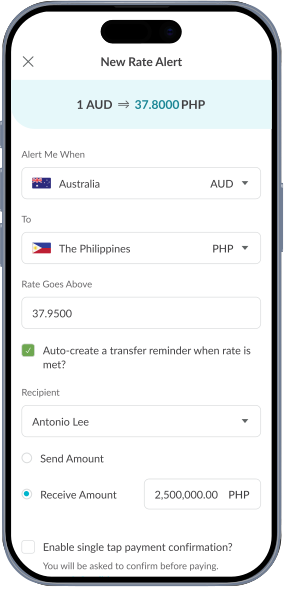
Rate Alert Reminders
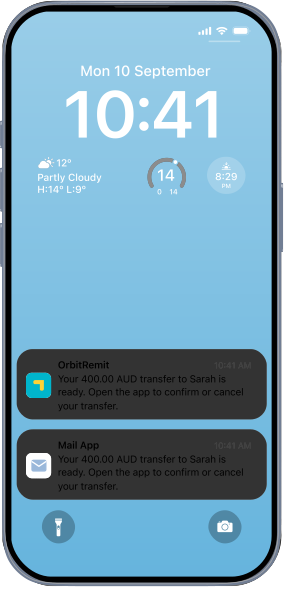
Notified users when their preferred FX rate was met, prompting them to initiate a transfer.
Push & Email Notifications
Explored reminder types and language that balances prompting action while maintaining user trust without full automation.
We hypothesised the following user pain points:
Repetitive data entry can feel tedious and unnecessary.
Confusion during payment step due to assumptions about automatic bank debits.
The removal of the recurring payment feature has created frustration, which is frequently cited in app reviews and support tickets.
KEY INSIGHTS & RECOMMENDATIONS
Our research revealed a need to better balance automation with user control. As much as customers valued convenience, they still wanted oversight over key actions. The notification copy raised concerns as customers described the tone as "scammy" and preferred straightforward, reminders directly from the app via push notifications.
Rate alerts were also found to be underused, so we proposed clearer marketing communications to raise awareness and allow users to create a transfer directly from the alert, further streamlining the journey. We recommended using behavioural data to deliver personalised reminders and timely nudges, increasing the relevance of the experience. Finally, we emphasised the importance of clear, plain language in all feature announcements to keep customers engaged and continue to build trust.
"I'm hoping the app would see the regularity and the frequency of the amount that I'm sending and then go this is what he's sending. It will create a preset. [...]. The ideal experience would be to remember patterns and create reminders."
– David (Customer)
I especially appreciated the customer insight above as it highlights a real opportunity. If resources allow, we’d be keen to explore automations that can detect regularity and frequency in user behaviour, so the app can proactively suggest reminder setups without requiring customer initiation.
RESULTS
Following the rollout of the repeat transfer button:
8% of all customers used the feature, with strong uptake among those who have sent 3 to 5 transfers a month.
Early feedback showed reduced input errors and fewer support tickets related to incorrect amounts or missed payments.
QUALITATIVE OUTCOMES
Improved trust through better confirmation UX:
Reduced mental load for frequent senders.
Better alignment with real-world money routines and behaviours.
WHAT'S NEXT
With the national rollout of PayTo (in Australia), we see further opportunities to streamline payments. Analysis shows that 23% of first-time bank transfers are voided, often due to customer misunderstanding. To address this, we A/B tested different copies and made visual design tweaks to clarify payment expectations. Looking ahead, future enhancements will aim to combine reminders with secure, automated debit to reduce friction and improve first-time success rates.
CONCLUSION
By addressing repetitive behaviours with thoughtful, semi-automated solutions, we created a more intuitive and trustworthy experience that supports both customer convenience and business growth.
Reimagining Features to Drive Repeat Transfers
© April Liau 2025
Back to recent works
© April Liau 2025
Back to recent works
Role
UX, UI, Usability Testing
Year
2025
Team
Product Manager, UI/UX Designer, Front-end Developers
OVERVIEW
53% of OrbitRemit's active customers across key corridors regularly send the same amount to the same recipient. Despite this highly predictable behaviour, the product lacked features to support or accelerate these routine transfers. Customers had to manually re-enter details each time, leading to frustration, fatigue, and potential for error. This gap also weakened habitual usage loops which are critical for retention in competitive financial services. I designed an experience that streamlines this repetitive process and encourages habit forming behaviour that aligns with our monthly active user targets while meeting customers needs around clarity and trust.
OBJECTIVE
Reduce friction in repeat transfers while reinforcing user trust and strengthening product stickiness.
RESEARCH
Using insights from previous user interviews and behavioural patterns, we identified three key personas:
We hypothesised the following user pain points:
Repetitive data entry can feel tedious and unnecessary.
Confusion during payment step due to assumptions about automatic bank debits.
The removal of the recurring payment feature has created frustration, which is frequently cited in app reviews and support tickets.
Alongside this, we explored three reminder-based concepts:
KEY INSIGHTS & RECOMMENDATIONS
Our research revealed a need to better balance automation with user control. As much as customers valued convenience, they still wanted oversight over key actions. The notification copy raised concerns as customers described the tone as "scammy" and preferred straightforward, reminder-style messaging.
Rate alerts were also found to be underused, so we proposed clearer marketing communications to raise awareness and allow users to create a transfer directly from the alert, further streamlining the journey. We recommended using behavioural data to deliver personalised reminders and timely nudges, increasing the relevance of the experience. Finally, we emphasised the importance of clear, plain language in all feature announcements to keep customers engaged and continue to build trust.
RESULTS
Following the rollout of the repeat transfer button:
8% of all customers used the feature, with strong uptake among those who have sent 3 to 5 transfers a month.
Early feedback showed reduced input errors and fewer support tickets related to incorrect amounts or missed payments.
QUALITATIVE OUTCOMES
Improved trust through better confirmation UX:
Reduced mental load for frequent senders.
Better alignment with real-world money routines and behaviours.
WHAT'S NEXT
With the national rollout of PayTo (in Australia), we see further opportunities to streamline payments. Analysis shows that 23% of first-time bank transfers are voided, often due to customer misunderstanding. To address this, we A/B tested different copies and made visual design tweaks to clarify payment expectations. Looking ahead, future enhancements will aim to combine reminders with secure, automated debit to reduce friction and improve first-time success rates.
CONCLUSION
By addressing repetitive behaviours with thoughtful, semi-automated solutions, we created a more intuitive and trustworthy experience that supports both customer convenience and business growth.
In-App Transfer Reminders
Let users schedule transfer prompts aligned with personal financial routines.
Rate Alert Reminders
Notified users when their preferred FX rate was met, prompting them to initiate a transfer.
Push & Email Notifications
Explored reminder types and language that balances prompting action while maintaining user trust without full automation.
– David (Customer)
"I'm hoping the app would see the regularity and the frequency of the amount that I'm sending and then go this is what he's sending. It will create a preset. [...]. The ideal experience would be to remember patterns and create reminders."
I especially appreciated the customer insight above as it highlights a real opportunity. If resources allow, we’d be keen to explore automations that can detect regularity and frequency in user behaviour, so the app can proactively suggest reminder setups without requiring customer initiation.
Rate-Sensitive Senders
Create multiple transfers to “phish” for better rates.
1. Rate-Sensitive Harvesters
Create multiple transfers to “phish” for better rates.
Frequent Consistent Senders
Send the same amount at regular, predictable intervals.
Occasional/Ideal-Rate Senders
Wait for personal or rate-based triggers to maximise conversion rate.
To validate interest and minimise development risk, we launched two lightweight features:
Repeat Transfer Buttons: Placed on the calculator and transfer history timelines, allowing users to recreate previous transfers with fewer steps.